Mythic Plus dungeons are designed to test more than raw damage output or healing throughput. Their defining challenge lies in affix interaction, where environmental pressure and systemic modifiers reshape how encounters must be approached. Among these modifiers, Sanguine, Quaking, and Grievous stand out for how directly they punish poor coordination and mechanical negligence.
This article examines how these affixes function, why they disproportionately expose group weaknesses, and what strategic adjustments are required to survive them consistently at higher key levels.
Affixes as Behavioral Enforcement Tools
Affixes are not random obstacles layered onto dungeon content. They are behavioral enforcement tools designed to pressure specific aspects of group play. Each affix targets a different failure mode, such as poor positioning, lack of awareness, or insufficient utility usage. In doing so, they expose habits that may remain hidden in lower difficulty content.
Sanguine, Quaking, and Grievous are particularly punishing because they operate independently of enemy intent. They do not require mobs to act incorrectly to cause failure. Instead, they punish player behavior directly, making them less forgiving and more revealing than many encounter mechanics.
Sanguine and the Cost of Poor Positioning
Sanguine transforms every enemy death into a potential hazard. Pools of healing and damage force tanks and damage dealers to reconsider pull size, kill order, and spatial control. The affix punishes groups that treat enemies as stationary targets rather than mobile threats.
Effective Sanguine management requires intentional movement. Tanks must plan where enemies die, damage dealers must avoid overcommitting to stationary casts, and groups must be willing to sacrifice damage uptime to preserve positioning. Failure to do so results in extended fights, unnecessary healing strain, and cascading mistakes.
Quaking and the Pressure of Personal Responsibility
Quaking shifts responsibility away from the group as a whole and places it squarely on individual awareness. Every player becomes a potential liability if they fail to adjust their positioning at the correct moment. Unlike many mechanics, Quaking does not scale its punishment gradually. Mistakes are immediate and disruptive.
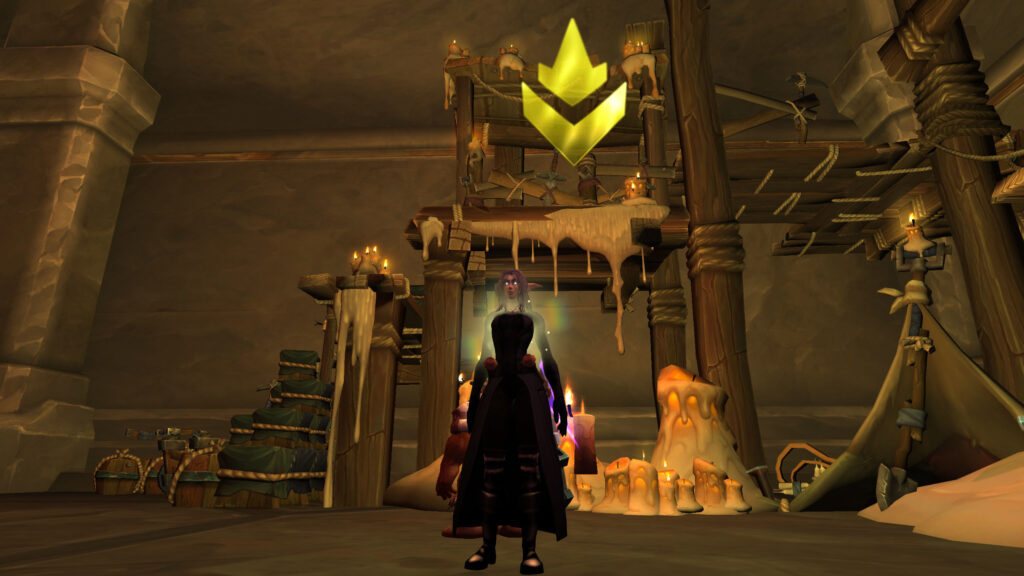
The affix also interferes with casting, healing channels, and stacked positioning strategies. Groups accustomed to tight formations must adapt dynamically, spreading just enough to avoid overlap while maintaining functional cohesion. Quaking rewards spatial discipline and punishes complacency.
Grievous and Sustained Healing Discipline
Grievous introduces a form of attrition that challenges healing consistency rather than burst response. By applying stacking damage over time effects to injured players, it forces healers to manage health proactively rather than reactively. Allowing players to linger at low health becomes exponentially dangerous.
This affix also exposes inefficient defensive usage. Players who fail to mitigate avoidable damage increase healer workload and risk overwhelming recovery windows. Grievous turns minor mistakes into persistent liabilities, making clean execution essential.
Core Strategies for Managing These Affixes
- Plan enemy deaths deliberately to control Sanguine placement
- Encourage constant micro movement rather than static positioning
- Stagger personal defensives to reduce Grievous pressure
- Interrupt unnecessary damage sources to preserve healer bandwidth
- Communicate movement intent during Quaking windows
Conclusion: Affix Mastery as a Skill Check

Sanguine, Quaking, and Grievous are not arbitrary difficulty spikes. They are deliberate tests of awareness, coordination, and discipline. Groups that approach Mythic Plus as a damage race often struggle under these affixes, while those that value control and consistency find them manageable.
Mastery of these affixes transforms Mythic Plus from a reactive experience into a controlled one. When players understand how their individual actions contribute to group success or failure, affixes cease to feel oppressive and instead become predictable challenges. Surviving them consistently is not about perfection, but about respect for the systems that govern high level dungeon play.